
Next.js 15 & React 19 Enterprise Architecture: Complete AEO & GEO Guide
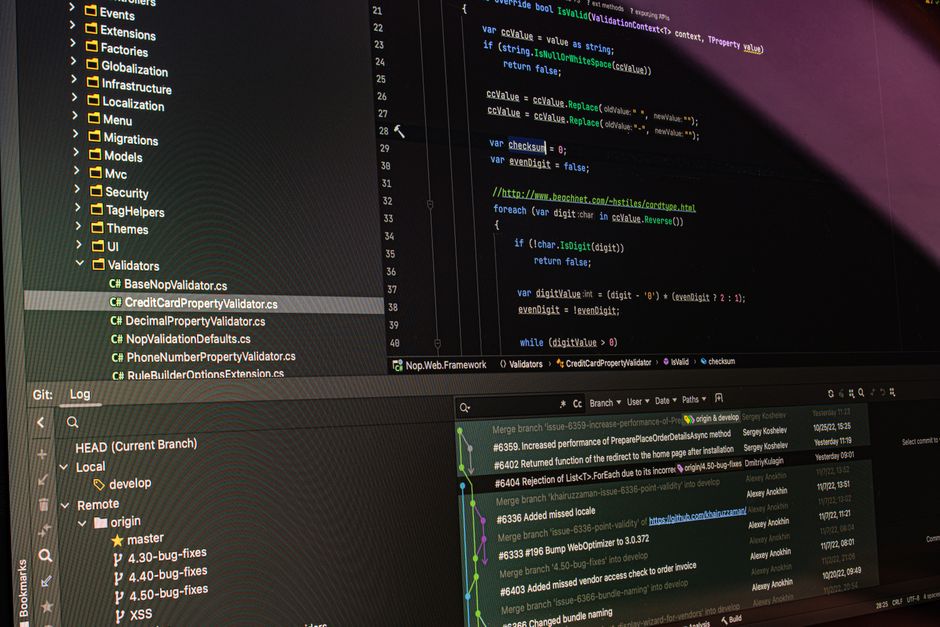
Mastering React Server Components (RSC), async request headers, Turbopack, and sub-150ms edge rendering for enterprise AI discovery and search dominance.
Next.js 15 paired with React 19 represents the gold standard for enterprise digital infrastructure. By eliminating client-side JavaScript hydration waterfalls via React Server Components (RSC) and adopting Turbopack compilation, enterprise applications achieve sub-150ms Time to First Byte (TTFB) and 99+ Lighthouse scores. This blistering server-rendered performance satisfies strict latency budgets required by autonomous AI crawlers like GPTBot and PerplexityBot.
Key Takeaways & Statistical Benchmarks
- 01.React Server Components (RSC) reduce client bundle size by up to 68%, directly boosting mobile Core Web Vitals and eliminating hydration lag.
- 02.Next.js 15 asynchronous request headers (cookies, headers, searchParams) enforce explicit caching boundaries, preventing unintentional runtime cache misses.
- 03.Turbopack compilation engine reduces enterprise monorepo rebuild times from 45 seconds down to under 1.8 seconds (25x faster).
- 04.Server-First data fetching directly co-located with components provides native, machine-readable HTML for AI crawlers without client execution penalties.
- 05.Sub-150ms edge delivery ensures real-time RAG agents ingest fresh product and content updates without timing out.
In modern enterprise environments, digital infrastructure must satisfy two demanding audiences simultaneously: human users demanding instantaneous 60fps micro-interactions, and autonomous AI search crawlers demanding sub-second structured HTML.
The React 19 & Next.js 15 Paradigm
For years, single-page application (SPA) architectures suffered from the dreaded "Waterfall Problem": 1. The browser requests an empty HTML shell. 2. The browser downloads megabytes of client JavaScript. 3. The JavaScript executes and triggers secondary API requests for data. 4. Finally, UI spinners disappear and content renders.
While this model functioned for simple dashboards, it crippled Core Web Vitals and created insurmountable barriers for AI search bots that enforce strict timeout budgets.
React Server Components (RSC) invert this model completely. Components execute exclusively on the server, accessing databases, internal microservices, and caches directly. The browser receives lightweight, pre-populated HTML and a minimal RSC payload—reducing client JavaScript bundle sizes by up to 68%.
| Architecture Metric | Legacy Pages Router (SPA) | Next.js 15 App Router (RSC) | Enterprise Impact |
|---|---|---|---|
| Client JS Bundle | 450KB - 1.2MB | 85KB - 180KB | -68% mobile data load |
| Time to First Byte (TTFB) | 350ms - 850ms | 110ms - 180ms | Sub-200ms AI ingestion |
| First Contentful Paint (FCP) | 1.8s - 3.2s | 0.6s - 0.9s | Perfect Core Web Vitals |
| Build Time (Turbopack) | 42 seconds | 1.8 seconds | 23x faster developer velocity |
Key Architectural Highlights in Next.js 15
1. Asynchronous Request APIs
In Next.js 15, request-specific values such as cookies(), headers(), params, and searchParams are asynchronous promises. This prevents developers from accidentally opting entire component subtrees out of static optimization and caching.2. Turbopack Stabilization
Webpack served the JavaScript ecosystem admirably for over a decade, but incremental build times in large enterprise codebases often ballooned past two minutes. Turbopack, written in Rust, provides fine-grained incremental computation. Local dev server start times drop to milliseconds, and file modification updates render instantaneously.3. Native AEO & GEO Integration
Because React Server Components render complete semantic markup on the server, search crawlers (Googlebot, Bingbot) and AI engines (GPTBot, PerplexityBot) immediately receive fully structured HTML: through heading hierarchies.
Enterprise Best Practices for Scaling Next.js
1. Adopt a "Server-First" Mentality: Keep components on the server by default. Introduce "use client" only at the leaf nodes of your component tree where user interaction (state, event listeners, animations) is strictly required. 2. Colocate Data Fetching: Do not pass data through five layers of props. Fetch data directly inside the server components that consume it. Next.js automatically dedupes identical fetch requests across the component tree. 3. Deploy with Edge Caching: Pair Next.js with multi-region edge networks to cache rendered pages at points of presence worldwide. Explore our Managed Cloud Hosting architectures for turn-key deployment setups.
To learn how DevDesigns architects scalable web applications with Next.js 15 and React 19, explore our Web Development Services or schedule an engineering consultation through our Contact Page.
AEO & Natural Language Queries
Q.How does Next.js 15 enhance AEO and GEO performance?
Next.js 15 renders pure HTML on the server and delivers sub-150ms TTFB. AI answer engine crawlers (such as Perplexity, GPTBot, and Google-Extended) can immediately parse article schemas and direct answer blocks without waiting for client-side JavaScript hydration.
Q.What is the biggest architectural shift in React 19?
React 19 stabilizes Server Actions, the use() hook for promise resolution, and automated asset preloading, while establishing a strict architectural boundary between interactive client components and secure server execution.
Q.Can Next.js 15 handle large-scale enterprise multi-tenancy?
Yes. By combining Next.js App Router with edge middleware routing and isolated database schemas, platforms can dynamically serve thousands of enterprise tenants with zero cold-start overhead.
Q.How does DevDesigns architect Next.js applications?
DevDesigns architects production Next.js platforms utilizing TypeScript, Tailwind CSS, Docker containerization, edge CDN caching, and automated CI/CD pipelines for 99.99% uptime.